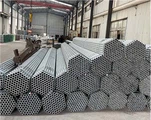
Steel tube manufacturing process
1. Hot rolling (extrusion steel pipe) : round tube billet → heating → perforation → three-roll diagonal rolling or extrusion → stripping → sizing (or reducing)→ cooling → straightening → water pressure test (or detection)→ marking → the raw material of the rolled pipe into storage is round tube billet, round tube embryo should be cut by the cutting machine and processed into billet with a growth degree of about 1 meters, and sent to the furnace by conveyor belt for heating. The billet is fed into a furnace and heated to about 1200 degrees Celsius. The fuel is hydrogen or acetylene. The temperature control in the furnace is the key problem. After the round tube billet comes out, it must pass through the pressure punch. Generally, the most common piercing machine is the conical roller piercing machine. This kind of piercing machine has high production efficiency, good product quality, large perforation size, and can wear a variety of steel. After the perforation, the round tube blank is successively rolled by three roller diagonal, continuous rolling or extrusion. After extrusion, remove the pipe and determine the diameter. The sizing machine rotates the steel embryo through the conical drill at high speed to punch holes and form the steel pipe. The inner diameter of the steel pipe is determined by the outer diameter length of the caliper drill bit. After the steel pipe is calibrated, it enters the cooling tower and is cooled by spraying water. After the steel pipe is cooled, it will be straightened.
2. Cold drawing (rolling) steel pipe: the circular tube billet - heat - punch to heading, annealing and pickling to apply oil (copper), multi-channel time cold drawing (cold rolled) to the tube billet - heat treatment - straightening, hydrostatic test (NDT) - > tag to put in storage. The rolling method of cold drawn steel pipe is more complicated than that of hot rolled steel pipe. The first three steps of their production process are basically the same. The difference starts from the fourth step, round tube blank after punching, to head, annealing. After annealing, special acidic liquid is used for pickling. After pickling, oil is applied. This is followed by a special heat treatment of the recolonized tube after multiple passes of cold drawing (cold rolling). After heat treatment, it is straightened. After the steel pipe is straightened, it is sent by conveyor belt to metal flaw detector (or hydraulic test) for internal flaw detection. If there are cracks, bubbles and other problems inside the steel pipe, it will be detected. After the steel pipe is inspected, it is also selected strictly by hand. After the steel pipe is inspected, the number, specification and production batch number are sprayed with paint. And by the crane into the warehouse.