

Scaffolding Ringlock System
Scaffolding system is one of the types of modular scaffolding. It enables workers to set up, use, and disassemble a temporary work structure with speed and efficiency, therefore saving on time and labor cost. Ringlock is one of the most sophisticated and complete scaffolding systems on the market. It has been designed to keep components minimal to allow for simple set up and dismantle. A single rosette sits at the core of all components. With a built-in safety mechanism and high load capacity, the ringlock scaffolding system is a popular choice in many different kinds of applications.
-
 Ringlock Standard With SpigotRinglock standard with spigot48.3*3.25*1000/1500/2000/2500/3000mmHot dip galvanized thick zinc coatAdd to Inquiry
 -
 Japanese Ringlock StandardMaterail:Q355BSurface:Hot dip galvanizedLightweight and increased fall prevention measures.Max legAdd to Inquiry
 -
 Japan Ringlock SystemJapan Ringlock systemHDGVertical 0.45m,0.81m,0.9m,1.8m,2.7m,3.6mledgerAdd to Inquiry
 -
 Japan Type Scaffolding LedgerType for Japan market Material:Q235BSurface :Hot dip galvanizedUsed in construction equipmentAdd to Inquiry
 -
 Ringlock StandardScaffolding Ringlock System is a modular system for industrial and construction application.It isAdd to Inquiry
 -
 Octagonlock ScaffoldingOctagonlock scaffolding is a highly reliable and stable system that is widely popular in Vietnam.Add to Inquiry
 -
 Ringlock Ledger HeadThe Ringlock ledger head belongs to one of the ringlock system components and is welded on aAdd to Inquiry
 -
 Ringlock Rosette PlateRinglock rosette plate connects ledger tube and diagonal tubes,which make modular system moreAdd to Inquiry
 -
 Ringlock Octagon DiscScaffolding ring lock octagon disks belong to one of the socket-type connecting ledger and diagonalAdd to Inquiry
 -
 Scaffolding Ringlock AccessoriesRinglock System accessories mainly include collar base,rosette plate,octagon plate,screw nut,braceAdd to Inquiry
 -
 Ringlock LedgerSurface: Hot Dip GalvanizedMaterial: Q235Ledger Length:0.3m,0.6m,0.9m,1.2m,1.5m,1.8mPipeAdd to Inquiry
 -
 Toe Board in ScaffoldingIt is essential part of scaffolding system because it safeguards the worker from lower bodyAdd to Inquiry


- Tel: +8619118858768
- Email: lea@topstar-scaffolding.com
- Add: RM.819, BLDG S5, SECTION 182 XIAOXIANG SOUTH RD, YANGHU ST., YUELU DIST., CHANGSHA, HUNAN, CHINA
Advantages of Scaffolding Ringlock System
Whether you are a construction worker specializing in offshore construction, shipbuilding, industrial maintenance, road construction or wall installations, ring scaffolding is vital to your success.
At the heart of the construction system is the ease of use and efficiency of scaffolding. While the ring-locking multi-system provides construction workers with a sturdy mechanism, the system is easy to install and remove.
Building engineers looking for a system that can be quickly and safely optimized for any facade geometry can rely on ring locks. You can lock at different angles and use the notches to align exactly at 45 or 90 degree angles.
The design of the ring scaffolding allows it to support higher loads than other systems on the market. This makes it suitable for both heavy and light construction activities. The flexibility of the rosette geometry facilitates various building types via slabs, bridges, steel or timber formwork.
Since the ring lock assembly is lightweight and easy to disassemble and assemble, it can be easily carried. Unlike other forms of scaffolding, these components take up less space, saving on storage and shipping costs.
Why Choose Us
Professional team
Our professional team collaborate and communicate effectively with one another, and are committed to delivering high-quality results. They are capable of handling complex challenges and projects that require their specialized expertise and experience.
Customized services
We listen to our clients objectives and aspirations and therefore provide customize solutions.
One-stop solution
At our manufacturing facilities, we provide a complete package that includes everything required to get you started, including training, installation and support.
24H Online service
We try and respond to all concerns within 24 hours and our teams are always at your disposal in case of any emergencies.
Types of Scaffolding Ringlock System
Standard scaffolding ring lock system
This is the most common and basic Ringlock system. It consists of scaffolding ringlock standard (hdg standard for ringlock system), horizontal braces and diagonal braces.

Ledger scaffolding ring locking system
This ring lock system has horizontal scaffolding sections (Hot Dip Galvanized ringlock ledger) connected to vertical columns.

Diagonal bracing ring locking system
This ring locking system enhances the scaffolding system and provides support. Diagonal bracing (diagonal cross bracing) helps reduce the risk of the scaffolding structure buckling or collapsing.

Corner scaffolding ring locking system
This ring-locking system allows scaffolding to be built around corners. It consists of uprights, cross braces, diagonal braces and angle connectors.

Channel scaffolding ring locking system
This ring lock system is designed to provide safe and easy access to elevated areas. It includes scaffolding step Ladders, handrails and ladder sections and other scaffolding ringlock accessories.

Cantilever scaffolding ring locking system
This ring lock system is used on projects that require scaffolding to be suspended over an area. It consists of a horizontal beam supported by vertical columns at one end and fixed to the building at the other end.
Application of Scaffolding Ringlock System
Building construction Ringlock scaffolding is frequently used in building construction, from residential properties to commercial and industrial buildings. The system's modular design makes it easy to adapt to different building shapes and sizes, making it an efficient and flexible solution.
Bridge construction When it comes to bridge construction, Ringlock scaffolding is particularly beneficial. The system can be easily erected in tight, complex spaces, and the modular design is adaptable to the bridge's unique geometry.
High-rise construction Ringlock scaffolding can be used in high-rise construction projects, which require platforms that can be easily moved up and down the side of a building, providing a safe and secure working environment for workers.
Industrial construction For industrial construction projects, Ringlock scaffolding is highly appreciated because it allows for the construction of large, complex structures in tight spaces, providing a safe and stable platform for workers.
Event stages Ringlock scaffolding can be used for constructing stages for events like concerts, exhibitions, fairs, and festivals. It is an efficient and customizable solution, allowing for easy setup and safe access to the stage.
Process of Scaffolding Ringlock System
Planning and preparation Before constructing the scaffolding Ringlock system, it is essential to plan the design, layout, and height of the scaffolding. The ground where the scaffolding will be erected needs to be leveled, stable, and free from any obstacles that may interfere with the assembly process.
Erecting the base The initial step is to construct a stable base by fixing vertical poles into the ground and connecting them with horizontal poles. The base should be level, and it should be secured firmly to prevent any movement.
Building the framework After creating a stable base, the next step is to build the scaffolding framework by fitting the Ringlock ledgers and standards. This is achieved by inserting the ledger blades into the cups and locking them in place with the Ringlock wedges. The ledgers are then secured using diagonal braces to provide added support.
Placing the platform Once the framework is constructed, the scaffolding platform is carefully placed on the ledgers. The platform should be level, secure, and adequately secured to prevent any movement.
Connecting the levels If multiple levels are required, the above steps need to be repeated. The upper levels are connected to the lower levels by fitting additional ledgers and standards.
Installing safety features Finally, the scaffolding system is fitted with safety guardrails, toeboards, and other safety features to ensure the safety of workers and to prevent any accidents.
Components of Scaffolding Ringlock System
Vertical column
Vertical scaffolding columns are available in a variety of sizes to fit any building. Uprights are also called standards.
Horizontal ledger
The cast end with retaining wedges is used to attach the ledger to a vertical standard. This connection is very strong and prevents components from coming loose.
Diagonal
Diagonals are available in different ledger lengths and lift heights. Similar to the ledger, the diagonals are connected to the stars via built-in wedge connections.
Truss Ledger
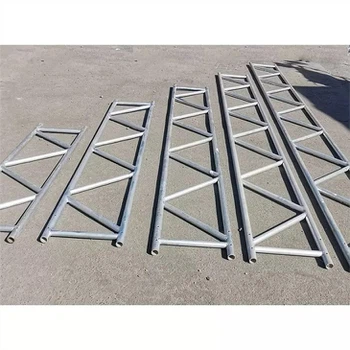
Truss beams strengthen the scaffolding and support the additional weight.
Brackets
The cross braces are connected to the star with rotationally molded ends and wedges to provide stiffness to the scaffolding. They can be used as guardrails in stair systems or other load-bearing components, and to support the sides of scaffolding structures.
Base Jack and base ring
The stand jack is the first component assembled in the Ringlock system and includes the pivot for height adjustment. They provide structural stability to the platform.
The material used in making scaffolding ringlock systems can vary depending on the manufacturer, the intended application, and the local regulations governing the use of scaffolding. However, the most commonly used materials are steel, aluminum, and composite materials.Steel is the most popular material used in making ringlock scaffolding due to its strength, durability, and resistance to impact and torsion. It is also easy to fabricate, shape, and weld, making it a versatile material for construction applications.Aluminum is another material used in making ringlock scaffolding due to its lightweight nature and resistance to corrosion and weathering. It is also easy to assemble and disassemble, which makes it ideal for temporary structures,Composite materials are also becoming more popular due to their lightweight nature, durability, and resistance to weathering and corrosion. They are made from a combination of materials such as fiberglass and plastic that are molded to meet the required strength and weight specifications.
How to Maintain Scaffolding Ringlock System
Regular inspection
Regular inspection of the scaffolding Ringlock System is crucial to identify any potential problems before they escalate. Look for any damages to the parts, such as cracks, splits, or warping. Also, check the nuts and bolts that hold the parts in place to ensure they are secure and do not come loose.
Cleaning
Regular cleaning of the scaffolding Ringlock System is important to prevent the buildup of dirt and debris, which can affect the performance of the scaffolding. Use a brush or vacuum cleaner to clean the parts.
Repair and replacement
If any parts of the scaffolding Ringlock System are damaged, they should be repaired or replaced as soon as possible. Cracked or warped parts can pose a safety hazard and should be removed from the scaffolding.
Proper storage
Proper storage of the scaffolding Ringlock System parts is important to prevent damage. Make sure the parts are stored in a dry, clean, and well-ventilated area. Avoid storing the parts in direct sunlight or areas with extreme temperatures.
Regular maintenance
Regular maintenance of the scaffolding Ringlock System parts is important to ensure their longevity and effectiveness. This includes oiling the metal parts and applying a sealant to prevent moisture damage.
Safety measures
Always follow safety guidelines when working with the scaffolding Ringlock System parts. Wear protective gear, such as gloves and goggles, and make sure the parts are properly secured in place before using them.
Scaffolding ringlock system is a type of scaffolding that uses a ringlock mechanism to connect the scaffold components. The working principle of a ringlock system is based on a locking collar that is connected to the scaffold components using a hinged connection. When the locking collar is rotated, it locks the hinged connection in place, securing the components together.In a ringlock system, the locking collars are arranged in a circular pattern around the scaffold components, creating a rigid structure that can support the loads applied to it. The ringlock mechanism allows for quick and easy assembly of the scaffold components without the need for separate fasteners or other connecting devices. This design also provides improved stability and safety compared to traditional scaffolding systems.
Is the scaffolding ring lock system safe
Yes, the scaffolding ring lock system is considered to be safe and reliable. The ring lock system is a type of modular scaffolding system that uses vertical standards with rosette connections and horizontal ledgers with wedge connections.
How to Install a Scaffolding Ring Lock System
Preparation
Before starting the installation, ensure the work area is clear of any obstructions and the ground is level and stable. Check the scaffolding ring lock system for any damage or missing parts and replace if necessary.
Assembly of base units
Assemble the base units of the scaffolding ring lock system according to the manufacturer's instructions. These base units serve as the foundation for the entire scaffold.
Positioning of braces
Place the braces upright on the base units and secure them in place using the locking collars. Make sure the braces are aligned and evenly spaced according to the desired scaffold configuration.
Installation of Rrungs
Install the rungs between the braces by inserting them into the appropriate slots and securing them with locking collars. Ensure the rungs are level and parallel to each other.
Connection of supports
Connect the supports to the base units or rungs using the locking collars. These supports provide additional stability to the scaffold.
Check for stability
Once the ring lock system is assembled, check for stability by applying pressure or weight to various parts of the scaffold. If any part feels unstable, adjust the locking collars or reposition the braces and rungs to achieve a rigid structure.
Use Safety precautions
Before using the scaffolding ring lock system, ensure all personnel are familiar with the safety guidelines provided by the manufacturer. Wear appropriate safety equipment such as hard hats, safety harnesses, and work boots.
Use and care
After installation, use the scaffolding ring lock system according to the manufacturer's instructions. Regularly inspect all components for damage or wear, and perform any necessary maintenance to ensure its safe and continued use.
Our Factory
Topstar Scaffolding Production Base is located in Daqiuzhuang Town, Jinghai District, 70 miles away from Tianjin Port and 45 miles away from Tianjin High-speed Railway Station. The factory has a registered capital of 10 million yuan, covering an area of 40,000 square meters, and a factory building area of 32,000 square meters. Topstar Scaffolding specializes in the design, production and sales of scaffolding products. It has 8 fully automatic steel plate processing production lines.
FAQ
Q: What is a Ringlock System?
Q: What makes Ringlock System better compared to other scaffolding systems?
Q: What are the components of the Ringlock system?
Q: What is the maximum height that Ringlock Scaffolding can reach?
Q: What are the loads supported by Ringlock scaffolding system?
Q: Is safety guaranteed with Ringlock System?
Q: How long does it take to install a Ringlock System?
Q: Can I customize the Ringlock scaffolding system?
Q: What are the components of ringlock system?
Q: What are the different types of system scaffolding?
Q: What scaffold uses locking ring connectors?
Q: What is cuplock scaffolding?
Q: What is the most popular type of scaffolding?
Q: What is the load capacity of ringlock scaffolding?
Q: What are the components of ringlock system?
Q: What is the largest scaffolding ever?
Q: What is the use of ring lock?
Q: What keeps scaffold frames together?
Q: What is the name of all scaffolding clamp?
Q: What are scaffold clips called?
We're professional scaffolding ringlock system manufacturers and suppliers in China, providing high quality products with competitive price. We warmly welcome you to buy or wholesale high-grade scaffolding ringlock system for sale here from our factory.
ringlock scaffolding, RingLock Vertical Mid Transom, Spigot clamp