

Steel Props
What Is Steel Props
As a critical component in construction, steel props play an essential role in providing temporary support to the structure during the construction process. Steel props are adjustable and can be easily installed, making them an ideal choice for various construction projects.
-
 Steel Shoring PropPregalvanized steel shoring propInner tube 48x1.8/2.0/2.2mmOuter tube 56x1.8/2.0/2.2mm12mm G pinAdjustable Length:1.7-3.0m;2.0-3.6m;2.2-4mBase plate:120*120*4mmAdd to Inquiry
 -
 Telescopic Steel PropsPregalvanized telescopic steel props Material:Q235Type:40/48,48/56;/48/60mmAdjustable length :1.6-4mAdd to Inquiry
 -
 Scaffolding PropScaffolding steel props are maily made of bottom plate,outer tube,inner tube,sleeve and nut pin. The scaffolding props can be adjusted to the different height to support construction fromwork systems.Add to Inquiry
 -
 Steel Scaffolding Proppregalvanzied steel scaffolding propInner tube:40*1.8*2200mm,Outer tube 48*1.8*2000mmAdjustable length 2.2-4m,G pin 12mm,Base plate 120*120*4mAdd to Inquiry
 -
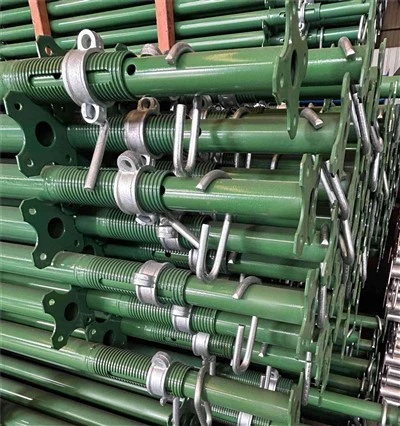 Adjustable Construction PropsAdjustable construction props are designed to provide support to the structure during the construction process. These props are made up of several components, including a bottom plate, outer tube,Add to Inquiry
 -
 Adjustable Steel PropsScaffolding adjustable steel props are maily made of bottom plate,outer tube,inner tube,sleeve and nut pin. The scaffolding props can be adjusted to the different height to support constructionAdd to Inquiry


- Tel: +8619118858768
- Email: lea@topstar-scaffolding.com
- Add: RM.819, BLDG S5, SECTION 182 XIAOXIANG SOUTH RD, YANGHU ST., YUELU DIST., CHANGSHA, HUNAN, CHINA
Why Choose Us
Professional team
Our professional team collaborate and communicate effectively with one another, and are committed to delivering high-quality results. They are capable of handling complex challenges and projects that require their specialized expertise and experience.
Customized services
We listen to our clients objectives and aspirations and therefore provide customize solutions.
One-stop solution
At our manufacturing facilities, we provide a complete package that includes everything required to get you started, including training, installation and support.
24H Online service
We try and respond to all concerns within 24 hours and our teams are always at your disposal in case of any emergencies.
Advantages of Steel Props
Durability and Strength
Scaffolding adjustable construction props are made from high-quality steel, which makes them durable and strong. They can withstand heavy loads and provide excellent support to structures during the building process. Scaffolding metal props are designed to be reusable, which means that they can be used for multiple projects, making them a cost-effective solution for construction companies.
Versatility
Scaffolding lightweight props are versatile and can be used for a wide range of construction projects, including residential, commercial, and industrial buildings. They are available in various sizes and can be adjusted to fit different heights, making them suitable for different types of structures. Prop jack scaffolding can also be used to support beams, slabs, and walls, making them an essential component of any construction project.
Ease of Use
Scaffolding adjustable prop jack are easy to use and can be set up quickly. They do not require any special tools or equipment, which makes them a convenient solution for construction companies. Scaffolding painted props can be adjusted to the required height using a simple pin and wedge system, which saves time and reduces the risk of errors during the building process.
Safety
Safety is a top priority in any construction project, and Scaffolding props are designed with safety in mind. They are made from high-quality steel, which makes them strong and durable, reducing the risk of accidents during the building process. Scaffolding props are also designed to be stable and secure, providing a safe working environment for construction workers.
Cost-Effective
Scaffolding shoring props are a cost-effective solution for construction companies. They are reusable, which means that they can be used for multiple projects, reducing the need for new props for each project. Scaffolding props are also easy to set up and adjust, which saves time and reduces labor costs.
Applications of Steel Props in Construction
As a critical component in construction, Scaffolding adjustable telescopic prop play an essential role in providing temporary support to the structure during the construction process. Scaffolding props are adjustable and can be easily installed, making them an ideal choice for various construction projects. In this article, we will explore the different applications of Scaffolding props in construction.
Formwork Support
Scaffolding props are often used as formwork supports to provide temporary support for the formwork and ensure that it is in the correct position during the concrete pouring process. They can also help to distribute the weight of the formwork evenly and prevent any sagging or deformation.
Floor and Beam Support
Scaffolding props can be used as temporary supports for floors and beams during the construction process. They provide a safe and secure working platform for workers to carry out their tasks, and can also help to prevent any collapse or accidents caused by overloading.
Bridge Construction
Scaffolding props are commonly used in bridge construction to provide temporary support for the bridge deck during the construction process. They can also be used to support the bridge piers and abutments, ensuring the stability and safety of the bridge.
Demolition
Scaffolding props are also used in demolition projects to support the structure being demolished. They provide temporary support and prevent the structure from collapsing prematurely, ensuring the safety of the workers and the surrounding area.
Shoring
Scaffolding props are commonly used in shoring applications to support walls, ceilings, and roofs during repair or renovation work. They provide temporary support and prevent any collapse or accidents caused by the weakened structure.
In conclusion, Scaffolding props are versatile and can be used in a wide range of construction projects. They provide temporary support and ensure the safety and stability of the structure during the construction process. With their adjustable and easy-to-install features, Scaffolding props are an essential component in construction and play a crucial role in ensuring the success of the project.
Acting load: First of all, you have to calculate the acting load per m2 which your Scaffolding props will have to support. Always remember to add to the weight of the slab itself, the overload of execution (weight of the workers, formwork, …).
Scaffolding heavy duty adjustable shoring props load capacity: Each prop has a minimum load capacity for each free height, determined by the manufacturer, by a table according to its class (local regulations or European standard EN). The prop load depends on the diameter of the cylindrical body, the thickness of the tube, the geometry of the prop itself and its ability not to buckle.
Free height of the prop: It is important to know the free height at which the prop will work on site. This is very important in order to obtain the load capacity according to the manufacturer’s data (point 2). Of course, the more headroom there is, the more the load capacity of the prop will be reduced.
Number of Scaffolding props : Once the data described above have been determined, the minimum number of Scaffolding props to be placed under the slab must be calculated, depending on the acting load and the load capacity at the free working height.
Price: Finally, never forget the price factor: of course optimizing the prop according to the preceding points will allow to find the right prop, with the required minimum load capacity and the cheapest price.

Composition and Use of Scaffolding Props
- When in use, the top end of the inner tube is connected to the supporting structure, and the bottom end of the outer tube is connected to the foundation.
The connectors use the same specification, namely M10 bolts, to facilitate manual installation and disassembly.
- The steel prop has a certain adjustable range to meet the needs of different supported structure heights.
The adjustability of this range is mainly realized by the different fixed points of the relative positions of the inner tube and the outer tube.
As shown in the left picture, the inner tube has a row of holes with the same spacing.
When supporting on-site, the relative position of the inner tube and the outer tube can be adjusted according to the actual requirements (moving the inner tube up and down), and then the pin (1 ) Insert the outer tube fine-tuning section (2) into the inner tube hole within the range of the long hole and then turn the adjusting nut (3) through the handle (4) until the pin is tightened, thus completing the steel support of a specific height installation.
- When disassembling, just turn the handle to loosen the pin, then remove the pin and put the inner tube into the outer tube.
The steel supporting structure is simple, easy to disassemble and assemble, and can realize rapid turnover, thereby reducing construction costs; in addition, the shape of the component is relatively regular, which can reduce the occupation of the construction site and is more convenient for transportation.
Understanding Different Types Of Scaffolding Props And Their Uses
Adjustable Props
are the most commonly used small adjustable, are the most commonly used steel props in construction. They consist of two parts: the outer tube and the inner tube. The outer tube is made of steel and threaded, while the inner tube is also made of steel and slides into the outer tube. Adjusting the height of the prop is made possible by rotating the outer tube to either extend or retract the inner tube.
These adjustable builders props for construction are versatile and can be used in various, including formwork, shoring, and falsework. They are also easy to store and transport, making them ideal for fast-paced construction projects.
Push-Pull Props
Push-pull props, also known as shore props, are similar to adjustable props in terms of construction, but they are designed to withstand greater loads. These scaffolding leveling screw props consist of two tubes, one inside the other, and are used to brace and support structures to prevent collapse. They are often used in conjunction with other tools like scaffolding, timber beams, or steel beams.
Push-pull props are especially useful in projects where space is limited, such as renovation and repair work in buildings with pre-existing structures. They can also be used in applications like trenching, excavation, and tunneling.
Heavy-Duty Props
Heavy-duty props are used in construction projects where large or heavy loads need to be supported. They are designed to withstand heavier loads than adjustable and push-pull props. Heavy-duty props can bear weights ranging from 20,000 to 40,000 pounds or more, depending on their size and construction.
These Scaffolding steel prop are ideal for supporting massive concrete slabs, steel beams, or other heavy materials during bridge or road construction. They are also useful for supporting high-rise structures like buildings or towers.
Features of Scaffolding Props
1. Robust Construction:
The heavy duty adjustable shoring posts are made from high-quality steel, ensuring their strength, durability, and load-bearing capacity. They are designed to withstand heavy loads and provide reliable support in demanding construction environments.
2. Adjustable Height:
Scaffolding props are typically telescopic, allowing for easy adjustment of the height to accommodate different requirements. This adjustability is achieved through an internal screw mechanism that allows the prop to be extended or retracted as needed, providing flexibility in various applications.3. Collapsible Design:
Scaffolding metal props are collapsible, which means they can be folded down or disassembled for convenient storage and transportation. This feature allows for efficient use of space when not in use and makes them easy to transport to different job sites.
4. Safety Features:
Scaffolding painted props often come with safety features such as locking pins or clips to secure the extended length and prevent accidental collapse. These features provide added safety for workers and ensure stability during use.
5. Load-Bearing Capacity:
Scaffolding builders props are designed to support heavy loads, making them suitable for a wide range of applications. The load-bearing capacity varies depending on the specific model and size, allowing for customization based on project requirements.
Basic Assembly Steps for Scaffolding Props


Inspect the Props:
Before assembly, inspect the Scaffolding props to ensure they are in good condition and free from any damage or defects. Check for any signs of corrosion, bent components, or worn-out parts. If any issues are found, do not use the prop and replace it with a new one.
Adjust the Length:
Determine the required length of the Scaffolding props based on the height and load-bearing requirements of the structure being supported. Some Scaffolding props come with adjustable telescopic sections that can be extended or retracted as needed. Adjust the length to match the desired height.
Positioning the Base Plate:
Place the steel prop on a stable and level surface. Ensure that the base plate of the prop is resting firmly on the ground or another stable foundation. The base plate should be placed perpendicular to the direction of the load to provide maximum stability.
Positioning the Head Plate:
If the steel prop has a head plate, position it against the structure to be supported, such as a beam or ceiling. The head plate should be in direct contact with the structure to distribute the load evenly. Some head plates may have adjustable components to accommodate different structural shapes.
Adjust the Height:
Use the adjustment mechanism on the steel prop to fine-tune the height according to the required support level. Ensure that the prop is securely locked in place at the desired height to prevent any unintentional movement during construction.
Tighten the Locking Nuts:
Once the desired height is achieved, tighten the locking nuts or pins on the steel prop to secure it in position. Double-check that all locking mechanisms are properly engaged to avoid any accidental adjustments during use.
Load Capacity and Safety Margin:
Pay close attention to the load capacity of the shoring props and ensure they are not overloaded. It's crucial to leave a safety margin to account for any unexpected additional loads that may occur during construction.
Stabilize the Structure:
Use multiple Scaffolding props at regular intervals to provide adequate support and stability to the structure. The number of props required depends on the size, weight, and load-bearing requirements of the structure being supported.ability to the structure. The number of props required depends on the size, weight, and load-bearing requirements of the structure being supported.
Scaffolding props require regular maintenance to ensure their proper functioning and safety. Some of the maintenance tasks that may be required for Scaffolding props include:
Cleaning: Regularly clean the Scaffolding props to remove dirt, debris, or any other substances that may affect their performance. This can be done using a brush, water, and mild detergent.
Inspection: Regularly inspect the Scaffolding props for any signs of damage, such as cracks, dents, or corrosion. Any damaged props should be immediately taken out of service and replaced.
Lubrication: Apply lubrication to moving parts of the Scaffolding props , such as adjustable screws or pins, to prevent them from seizing or becoming stiff. This will ensure smooth and easy adjustment when needed.
Storage: Properly store the Scaffolding props when not in use to prevent rust or damage. This may involve keeping them in a dry and well-ventilated area, away from moisture or chemicals that could cause corrosion.
Testing: Periodically test the Scaffolding props to ensure their load-bearing capacity is within the specified limits. This can be done using load testing equipment or by consulting the manufacturer's guidelines.
It is important to follow the manufacturer's instructions and guidelines for maintenance to ensure the longevity and safe use of Scaffolding props . Additionally, regular maintenance and inspection help identify any potential issues early on, reducing the risk of accidents or failures during use.
Our Factory
HUNAN TOPSTAR SCAFFOLDING(TSS) is a leading manufacturer and exporter of scaffolding products. Our main products include metal plank,hot dip galvanized pipe,ringlock systems,frame systems,shoring props, jack base ,ladders and couplers ,which are widely used in servicing the oil & gas, petrochemical, pharmaceutical, construction and marine industries.

FAQ
We're professional steel props manufacturers and suppliers in China, providing high quality products with competitive price. We warmly welcome you to buy or wholesale high-grade steel props for sale here from our factory.
scaffolding telescopic props, scaffolding steel prop, Scaffolding Prop