

Scaffolding Couplers
What Is Scaffolding Couplers
Scaffolding couplers belong to the building construction components. Its main use is to connect the scaffolding, relying on the friction between the connector and the steel pipe to transfer the load. Widely used in various sizes of construction sites, it plays a greater role in the auxiliary aspect. Because there are initial defects in the scaffolding structure, such as the initial bending of the bars, load eccentricity, etc. are large. Therefore, we need to use scaffolding couplers to stabilize the scaffold.
-
 German Type Double CouplerGerman Type Double coupler 48.3*48.3mm Right Angle Coupler Scaffolding Drop Forged Double CouplerAdd to Inquiry
 -
 German Type Swivel CouplerGerman Type Swivel CouplerMaterial: Q235BNut Size: 22 mm Tube Diameter: 48.3 mm Weight: 0.97–1.56Add to Inquiry
 -
 German Type Forged CouplerDimension:48.3*48.3mm/48.3*60.3mm/60.3*60.3mmNut sizes:22mmStandards:EN74/BS1139/CESurface:Hot DipAdd to Inquiry
 -
 Pressed CouplerSurface: Electro-galvanizedMaterial: Q235Standard: BS1139/EN74Certificate:ISO,SGS,BV TUVProcessingAdd to Inquiry
 -
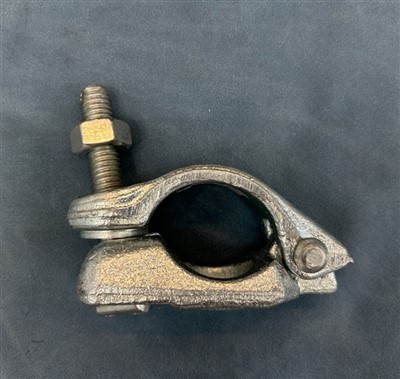 scaffolding single couplerScaffolding single coupler:Surface:Electro-galvanizedMaterial:Q235Standard:BS1139/3N74ProcessingAdd to Inquiry
 -
 Board Retaining CouplerAll TOPSAR Scaffolding couplers are tested and conform to the requirements of BS1139 and EN74 classAdd to Inquiry
 -
 Putlog CouplerAll TOPSTAR Scaffolding Forged fittings provide the important combination of strength andAdd to Inquiry
 -

-
 Forged Swivel CouplerThis scaffolding fittings connects two scaffold tubes at right angles.This is a load bearingAdd to Inquiry
 -
 Scaffolding Double CouplerThis scaffolding fittings connects two scaffold tubes at right angles.This is a load bearingAdd to Inquiry


- Tel: +8619118858768
- Email: lea@topstar-scaffolding.com
- Add: RM.819, BLDG S5, SECTION 182 XIAOXIANG SOUTH RD, YANGHU ST., YUELU DIST., CHANGSHA, HUNAN, CHINA
Advantages of Scaffolding Couplers
Safety
Scaffolding couplers provide a secure and stable connection between the tubes, making the structure safe for workers to use.
Versatility
Couplers can be used to join tubes with different diameters, providing versatility and flexibility in scaffolding design.
Durability
High-quality scaffolding couplers are made from durable materials like steel, making them long-lasting and able to withstand wear and tear.
Time-Saving
Couplers are quick and easy to use, reducing installation time and increasing productivity on-site.
Cost-Effective
Couplers are cost-effective because they can be re-used multiple times, reducing the need for purchasing new materials.
Adaptable
Couplers can be used in a variety of industrial sectors, including construction, mining, and manufacturing.
Stability
The tight grip of scaffolding couplers ensures that tubes remain securely connected, providing stability to the overall scaffolding structure.
Compliance
Couplers that meet industry standards and regulations help ensure scaffolding structures meet safety standards and compliance requirements.
Why Choose Us
Professional team
Our professional team collaborate and communicate effectively with one another, and are committed to delivering high-quality results. They are capable of handling complex challenges and projects that require their specialized expertise and experience.
Customized services
We listen to our clients objectives and aspirations and therefore provide customize solutions.
One-stop solution
At our manufacturing facilities, we provide a complete package that includes everything required to get you started, including training, installation and support.
24H Online service
We try and respond to all concerns within 24 hours and our teams are always at your disposal in case of any emergencies.
Types of Scaffolding Couplers
Swivel scaffolding couplers The rotating scaffolding coupler is usually used to connect support elements. It is made of drop-forged or pressed steel in a robust design, which is designed to increase the durability and reliability of the rotating scaffolding coupler.
Right-angle scaffolding couplers A right-angle scaffolding coupler is a scaffolding coupler that connects at right angles so that the tubes are arranged at right angles. It is also the most common type of scaffolding coupler and it can be used to resist tensile or compressive loads.
Sleeve scaffolding couplers Sleeve scaffolding couplers allow the steps of the tubes to be connected end to end coaxially. This type of scaffolding coupler is generally used for end-to-end connections of scaffold tube standards.
Wedge couplers These have a wedge-shaped design that provides maximum strength and stability when joining two tubes together.
Swivel couplers Also known as double couplers, these can connect two tubes at any angle. They have a swivel function that enables the tube to spin without loosening the connection.
Putlog couplers These are used to connect horizontal tubes or putlogs to the vertical tubes of a scaffold.
The Application Of Scaffolding Couplers

The construction plan of coupler-type steel pipe formwork bracket must be prepared before construction, and a more strict and thorough construction plan should be formulated. If the plan is not formulated well, some unexpected events may occur during construction.
The appearance quality requirements of couplers. Frequently check the appearance quality of couplers. If there are cracks, deformations or bolts with sliding wires, it is strictly prohibited to use them; to prevent construction failures and accidents when using these unqualified couplers.


The steel pipes and couplers used for the installation of the coupler-type template bracket must be sampled before use to check whether the quality and appearance of the steel pipes and couplers meet the standards. Sampling testing shall not be used without testing or failing testing.
Regarding the bearing capacity of the couplers, the construction load on the working layer should meet the design requirements. It should not be overloaded. It must carry a certain weight. The scaffold must not be connected to the formwork bracket. When connecting, certain treatment must be performed to ensure the reasonable load of the coupler weight.

Process of Scaffolding pipe Couplers
PreparationThe scaffolding couplers are first checked for any damage or defects. They are also cleaned to remove any dust or debris that may have accumulated on them.
Identification of type of coupler Depending on the type and size of the tubes being connected, the appropriate type of 90 degree coupler is selected. Popular couplers include swivel couplers, fixed couplers and sleeve couplers among others.
Positioning of tubes The tubes are then positioned in the desired locations to form the scaffold structure. The ends of the tubes that will be joined by the coupler are left open.
Attaching the coupler The scaffolding coupler is then positioned over the ends of the tubes to be joined. The bolts on the coupler are tightened securely using a spanner.
Inspection The assembled scaffold is then inspected to ensure that all joints are securely tightened and that the couplers are properly aligned. Any loose or defective couplers are replaced.
Dismantling When the scaffolding is no longer required, the scaffolding component couplers are removed from the tubes using the spanner and the tubes are dismantled.
1.Body The body of the tube and scaffold coupler is the main part of the coupler that wraps around the scaffolding tube. It is usually made of high-grade steel and has a rigid design to provide a strong and secure connection.
2.Bolts Scaffolding couplers have bolts that connect the body of the coupler to the scaffolding tube. The bolts are usually made of high-tensile steel and are designed to withstand heavy loads.
3.Nut The nut is used to tighten the bolts and secure the coupler onto the scaffolding tube. It is usually made of high-grade steel and is designed to be tightened using a wrench.
4.Locking Clip Some joint coupler for scaffolding have a locking clip that locks the coupler onto the scaffolding tube. This provides additional safety and prevents the pipe coupler scaffolding from accidentally coming loose.
5.Pins Some scaffolding couplers have pins that insert into the scaffolding tube to provide additional stability and prevent the tube from slipping out of the coupler.
Scaffolding couplers are typically made of high-strength steel or malleable cast iron. The material chosen for the board retaining coupler depends on the load-bearing requirements and the environmental conditions where the scaffolding will be used. Some couplers may also be made of aluminum or plastic for lightweight applications. Regardless of the material, all scaffolding couplers must meet relevant safety standards and have undergone extensive testing to ensure their reliability.

How to Maintain Scaffolding Couplers
Regular inspection
Regular inspection of the scaffolding couplers is crucial to identify any potential problems before they escalate. Look for any cracks, deformities, or corrosion on the surface of the couplers. Also, check the fasteners and ensure that they are secure and undamaged.
Cleaning
Regular cleaning of the couplers is important to prevent the buildup of dirt and debris, which can affect the performance of the couplers. Use a brush or vacuum cleaner to clean the couplers.
Wear parts maintenance
Wear parts like bolts, washers, and nuts need regular maintenance and replacement. Check the condition of these parts and replace them when necessary.
Lubrication
Proper lubrication is essential for the smooth operation of the scaffolding couplers. Apply the appropriate lubricant to the coupler parts as per the manufacturer's instructions.
Regular servicing
Regular servicing of the couplers is important to ensure their optimal performance. This includes greasing the bearings, replacing the bolts and washers, and checking the electrical connections.
Safety measures
Always follow safety guidelines when working on the couplers. Wear protective gear and ensure that the couplers are off when conducting maintenance or repairs.
Determine your needs
The first step is to determine your specific needs. What type of work are you going to do? What is the height and width of your scaffolding? What type of materials will you be working with? Answering these questions will help you determine which type of scaffolding connector you need.
Check the material
The material of the scaffolding connector is important to consider. You want a connector that is durable and can withstand the weight of your scaffolding and any materials you will be working with.
Look for a warranty
Make sure the scaffolding connector you choose comes with a warranty. This will give you peace of mind knowing that the connector is of high quality and will last for a long time.
Check the brand
The brand of the scaffolding connector is also important to consider. Look for a reputable brand that is known for producing high-quality connectors.
Read reviews
Before making a purchase, read reviews of the scaffolding connectors you are interested in. Look for connectors with a high rating and positive reviews.
How to Use Scaffolding Connectors Correctly
Confirm that the type and specification of the connector matches the scaffolding material and size. Check the connector for damage or wear, and replace it in time. When installing the connector, make sure that it is firm and stable and that it is operated correctly according to the instructions. Overloading should be avoided when using the connector to avoid damage or safety incidents. During use, the tightness and wear of the connector should be checked regularly, and adjusted or replaced in time. When removing the connector, it should be relaxed and secured first to avoid the danger of falling or sliding.For connectors that need lubrication, lubrication maintenance should be carried out regularly to ensure their normal operation. When using the connector, you should pay attention to safety precautions, such as wearing a seat belt, using a safety net, etc. For unfamiliar connectors, you should first understand how to use them and precautions to avoid accidents.
What Are the Operation Steps of a Scaffolding Connector
Assemble the scaffolding
First, assemble your scaffolding according to the manufacturer's instructions. Make sure that the scaffolding is sturdy and stable before proceeding.
Attach the scaffolding connector
Next, attach the scaffolding connector to the top edge of your platform or deck. Ensure that the connector is properly aligned and positioned so that it can support the weight of your scaffolding and any materials you will be working with.
Secure the platform
Once the connector is attached, secure the platform or deck to the scaffolding. Use the screws or bolts provided in the connector to secure the platform in place.
Load the platform
Load your platform or deck with the materials you will be working with. Make sure that the materials are evenly distributed and do not create any uneven weight distribution.
Test the scaffolding
Before using your scaffolding, conduct a safety inspection to ensure that the scaffolding is stable and secure. Test the scaffolding by adding a few more materials to the platform and making sure that it does not tip over.
Disassemble the scaffolding
Once you are finished with your scaffolding, follow the manufacturer's instructions for disassembling the scaffolding. Unscrew the platform from the connector and unfasten any other components as needed.
Our Factory
Topstar Scaffolding Production Base is located in Daqiuzhuang Town, Jinghai District, 70 miles away from Tianjin Port and 45 miles away from Tianjin High-speed Railway Station. The factory has a registered capital of 10 million yuan, covering an area of 40,000 square meters, and a factory building area of 32,000 square meters. Topstar Scaffolding specializes in the design, production and sales of scaffolding products. It has 8 fully automatic steel plate processing production lines.
FAQ
We're professional scaffolding couplers manufacturers and suppliers in China, providing high quality products with competitive price. We warmly welcome you to buy or wholesale high-grade scaffolding couplers for sale here from our factory.
board fixed coupler, Single Coupler, drop forged double coupler